
Artist Statement
Black to Move?
Is there still a move for us to make?
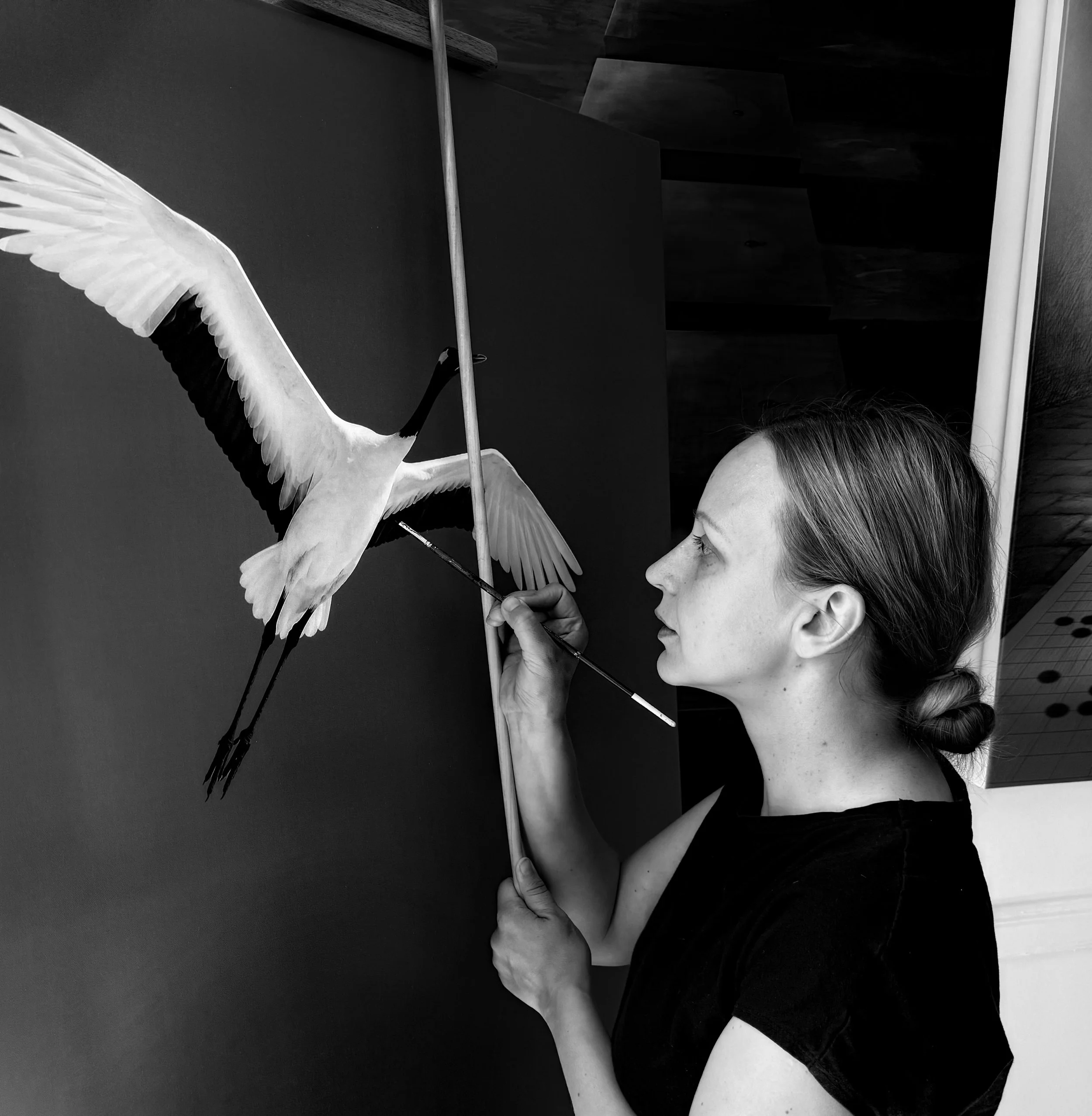
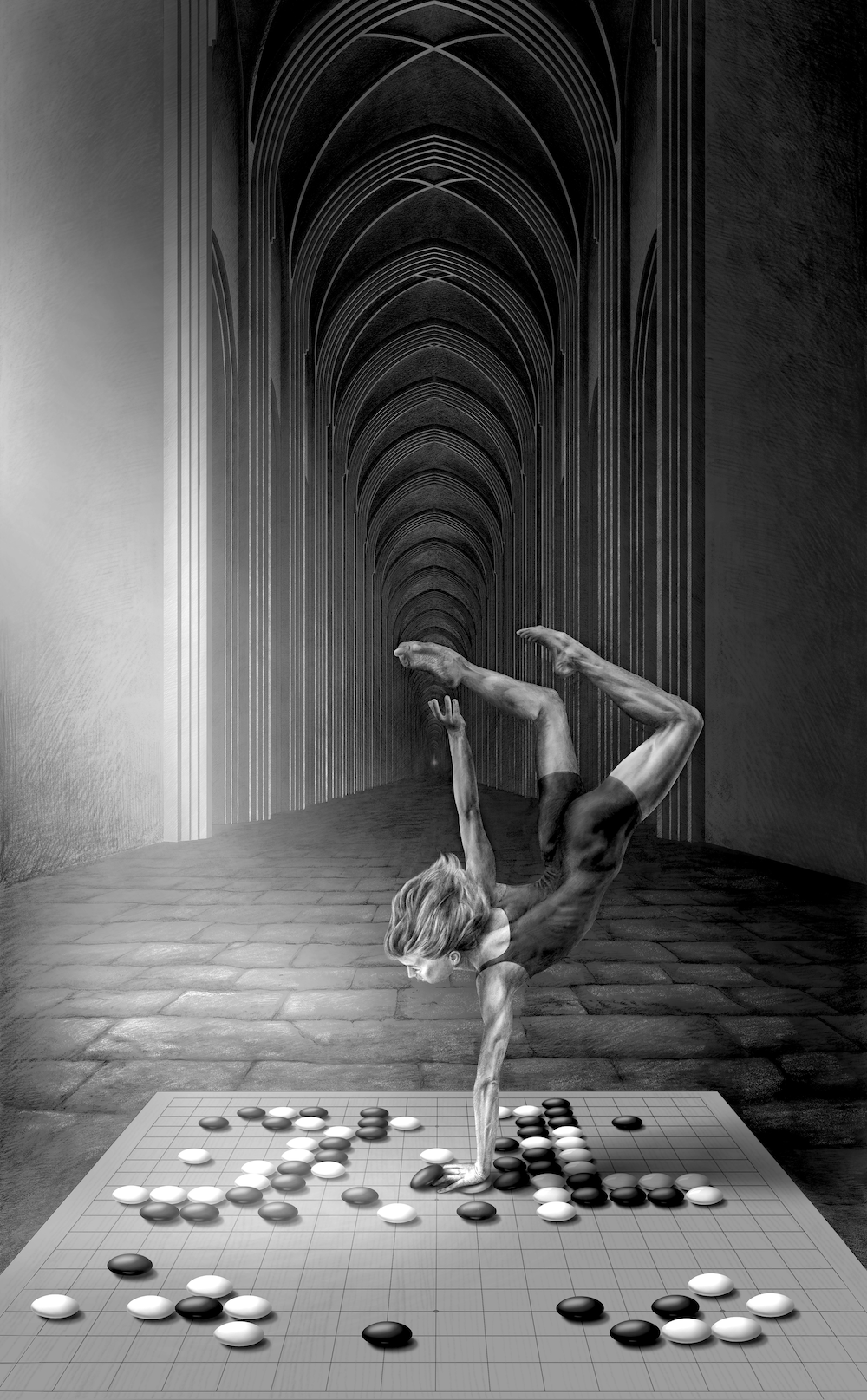
My upcoming exhibition of greyscale paintings asks whether there is still a move left for us to make in a game we can no longer win. I search for the answer inside another question: where exactly are we in the larger game? In Go, the move number is always known. In life, it never is.
The exhibition examines pivotal moves from historic games. Once it runs out of historical precedent, it asks if we can still rely on human intuition:
Move 1 After three thousand years of Go, could we still be at Move 1? Was building AI our opening move?
Move 37 Maybe, the best move looks like a mistake at first?
Move 78 Maybe one move in ten thousand is still ours to see.
Move 80 Or are we staring at a hallucinating machine?
Move 106 Maybe calamity already struck...
Move 107 …and we picked up the stones and played on.
Move 127 Three thousand years later, do we have the heart of an old master or a true beginner?
Move 189 Who are "we" anyway? If each one of us laid a stone in a single game, would we still have a game?
Move 209 Maybe we have lost the game since Go moved beyond our intellectual horizon?
Move 221 Maybe we are just a couple stones behind?
Move 411 Or we are deep in a grinding ko?
Penultimate Move Or did the game just morph before it ended?
Last Move Unlike our opponent, can we feel what the last move is like?
Move 0 Not a legal move that asks if we understand the rules but not the game…
The moves are drawn from entirely different games and eras, yet they share one thing common: someone was there to count them. And if we are no longer the best at counting, do we still count?
I began this series with Move 78—from the only officially recorded human victory against AlphaGo. It forced me to question: if one move in ten thousand is still visible to a human mind, what else might remain possible?
I do not claim to have found the answer. Go players keep playing. Painters keep painting. And I see that the moves continue as long as we count.
Black to move.